An animated comedy series

Success Sitcoms

Created by Jason A. Plouff. Starring the original lightbulb characters Sage and Spark.

Funny, heartfelt episodes about everyday self-improvement ideas — gratitude, comfort zones, and the schemes we invent along the way.

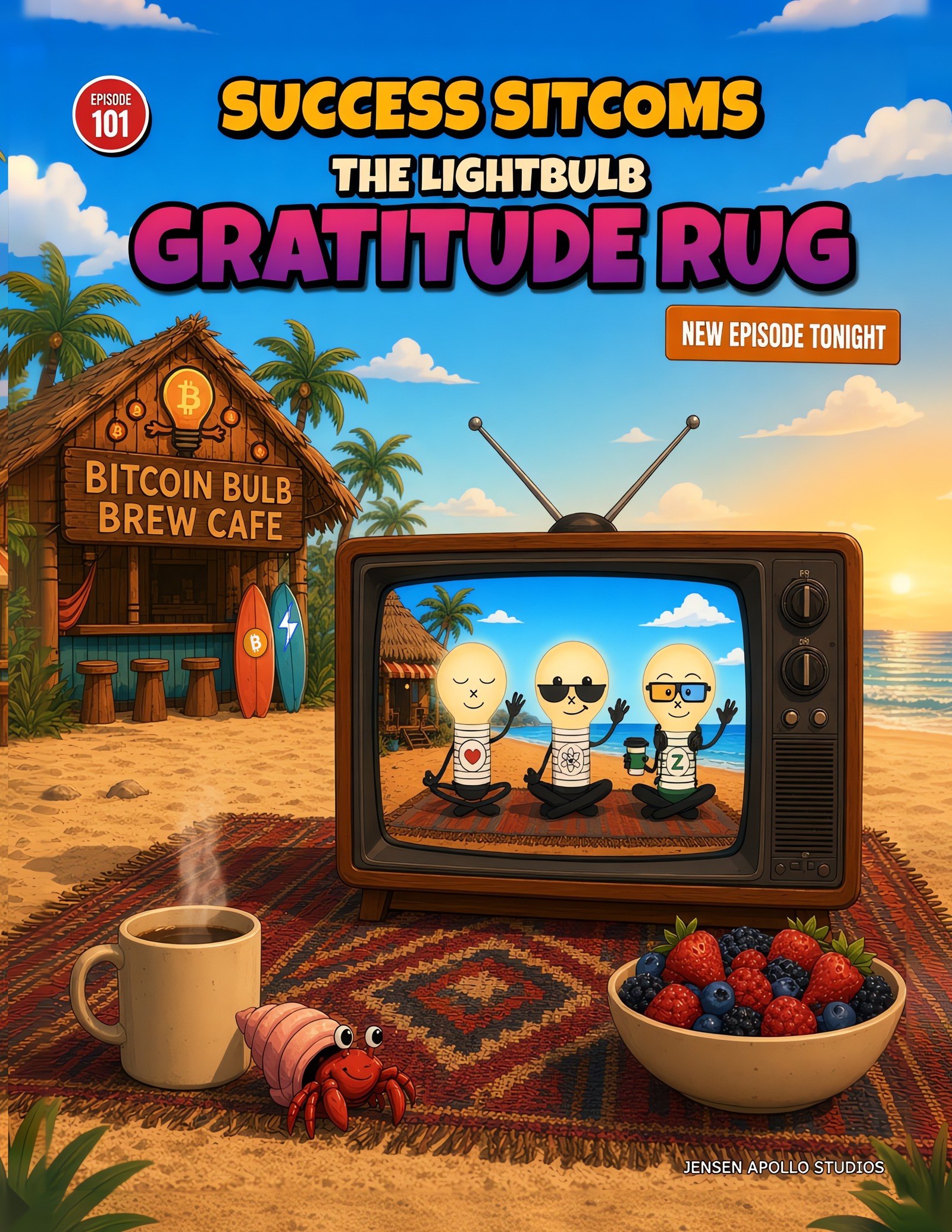
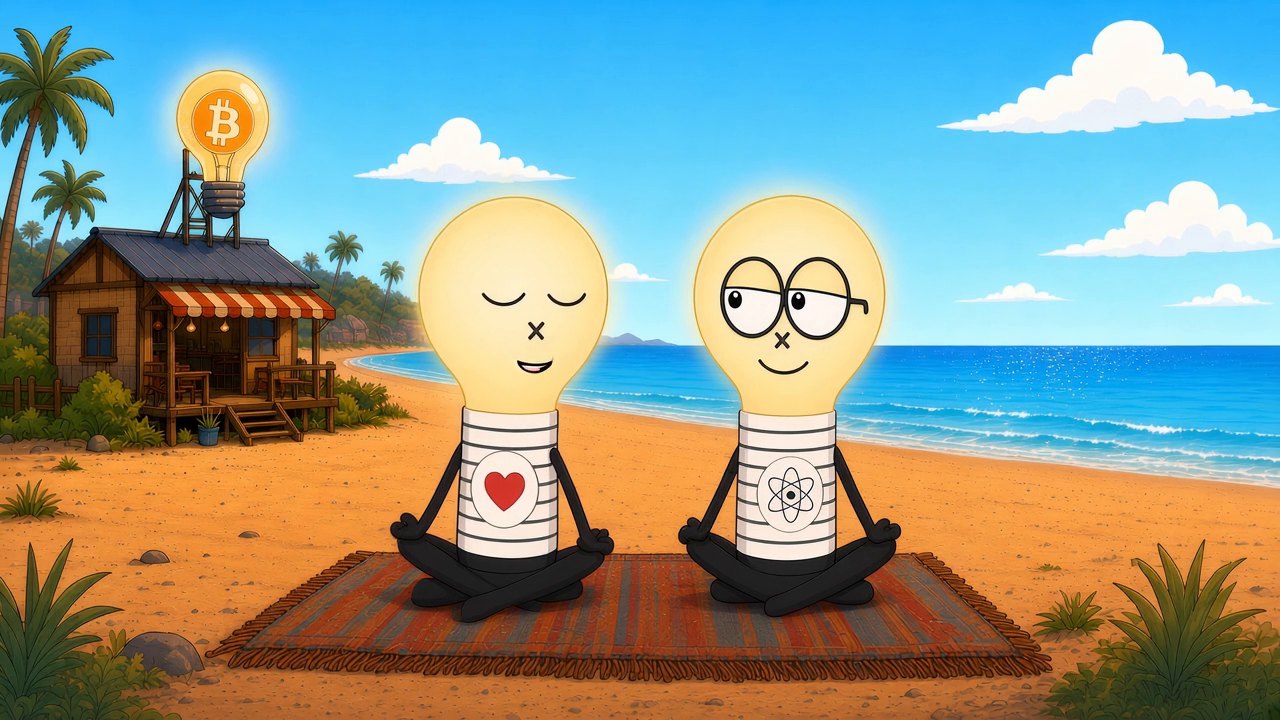
Official cover of The Lightbulb Gratitude Rug: Sage, Spark, and a friend sit on a rug on a television at the beach, beside the Bitcoin Bulb Brew Cafe.

The Vision

A simple plan, told plainly

Success Sitcoms is an animated comedy series of lightbulb characters turning self-improvement ideas into funny, heartfelt episodes.

The plan is to produce a simple, affordable animated pilot in Jason’s original artwork, protect the original characters and show, and publish a companion comic book for each episode as it’s made.

Sage is calm, grounded, and never far from her orange mug. Spark is all big glasses, bigger schemes, and a good heart. Together they try to invent something that’s good for the world — and, if Spark has his way, good for the wallet too.

The world of Success Sitcoms

A beach hut, a town, and a few living lights

Sage and Spark’s days often begin at a thatched beach café. Other episodes open the map wider, into Midtown U.S.A. — a place with a bowling alley, Little League bleachers, and plenty of human (and lightbulb) mischief.

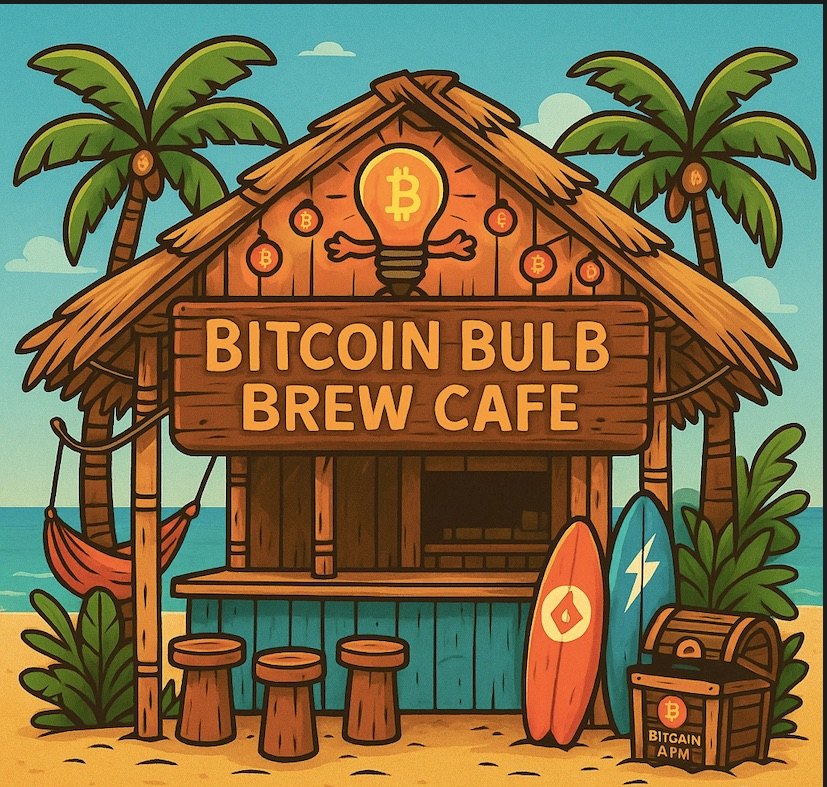
The Bitcoin Bulb Brew Cafe, a thatched beach hut with surfboards, stump stools, and a glowing lightbulb sign.

The Bitcoin Bulb Brew Café

Everyone calls it The Hut. It sits on stilts in the sand, with a golden thatch roof, a teal counter, a hammock, and a couple of surfboards leaning on the wall. Sage and Spark meet here to pitch ideas, drink coffee, and argue — kindly — about what is good for the world and what is good for the wallet.

Midtown U.S.A.

Just beyond the beach is Midtown, the hometown of later episodes. In Tribal Berries, four Midtown dads would rather bowl at the No Name Bowling Alley than watch their sons play Little League. In The Special iPhone, Midtown is the stage for a campaign trail, a bus stop, and a scheme that should never have started.

The cast

Original characters created by Jason A. Plouff. These are the faces you’ll meet most often in the first episodes.

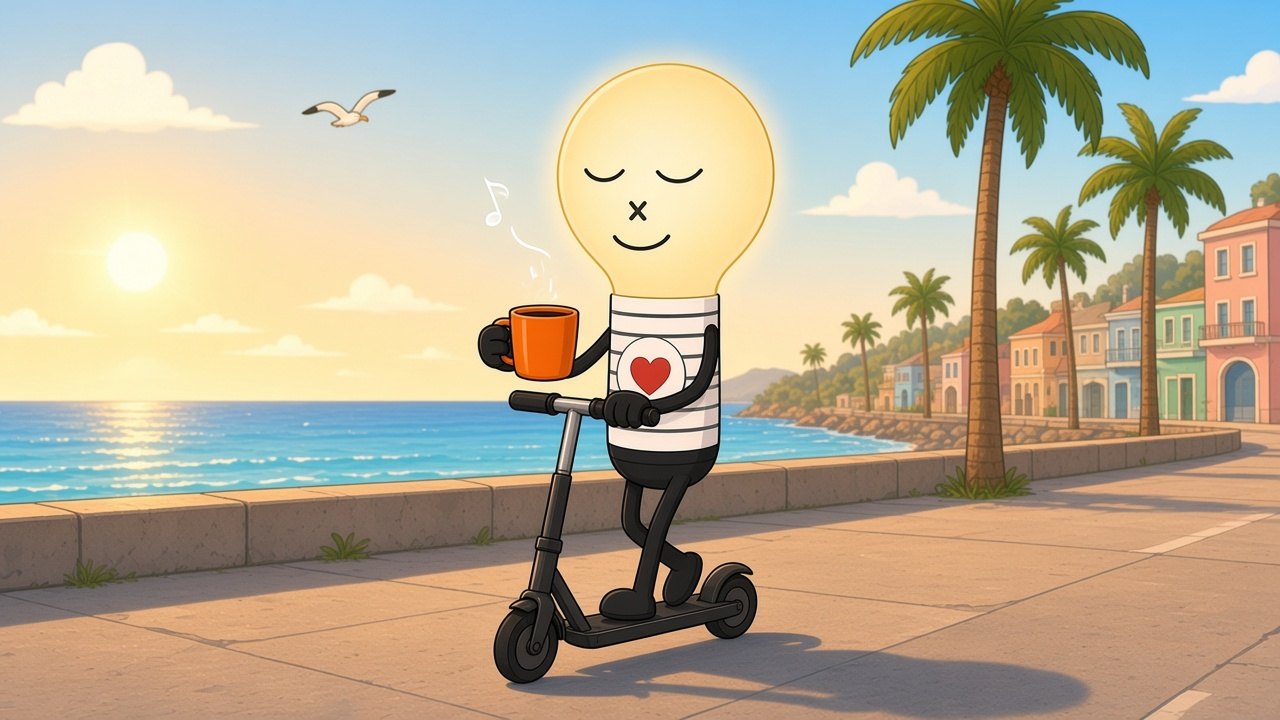
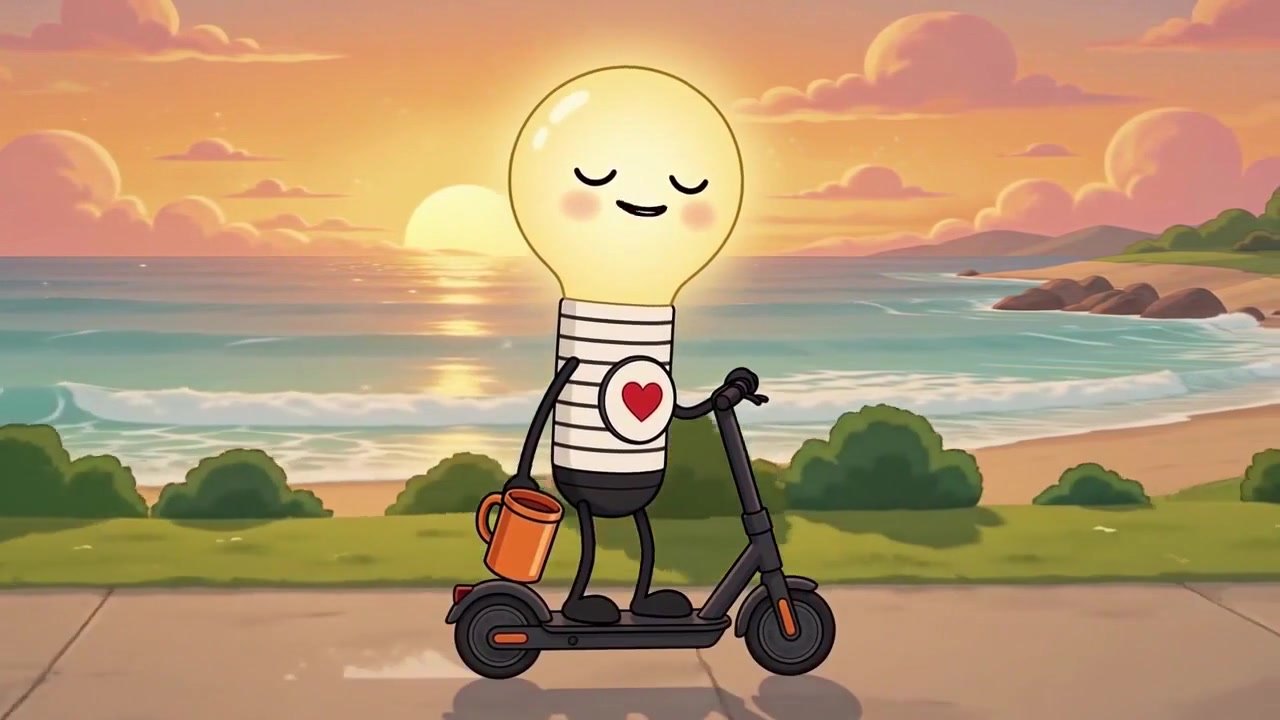
Sage rides a scooter along the coast, holding her orange mug.
Sage The grounded one. Calm, kind, witty, and quietly mischievous. She leads the gratitude moments, keeps the pitches honest, and is almost never without her orange mug. She rides an electric scooter. Voice: a clear, calm, warm British woman.
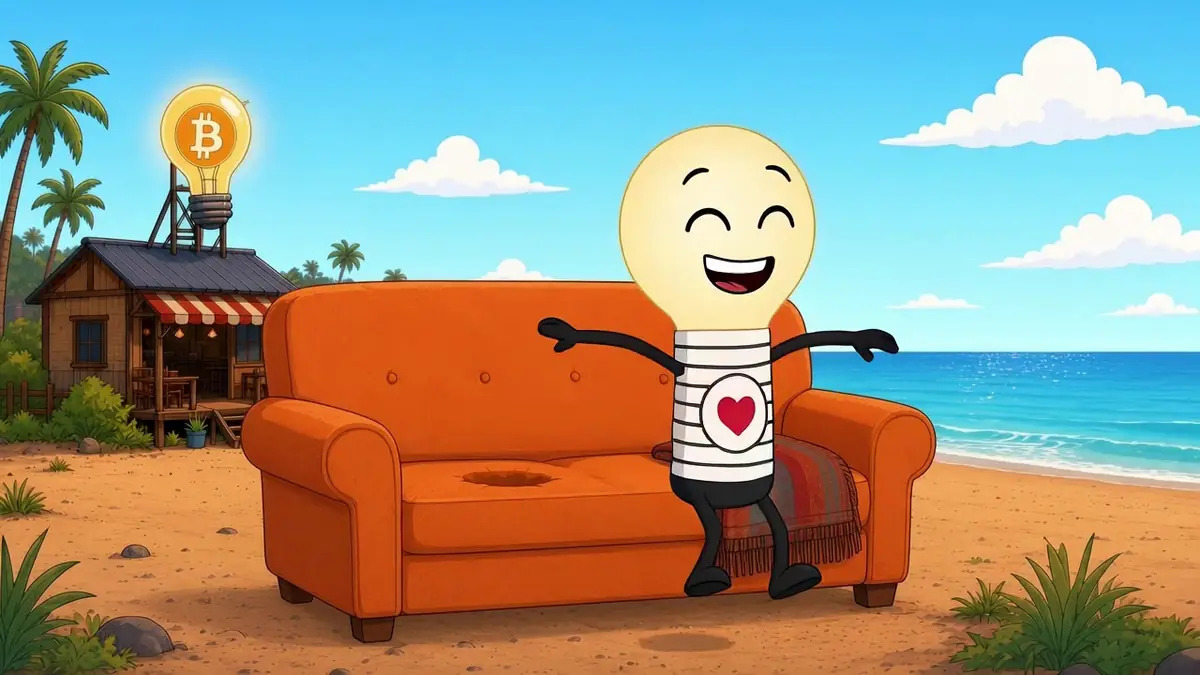
Spark stands on the beach, grinning in his glasses, arms thrown wide.
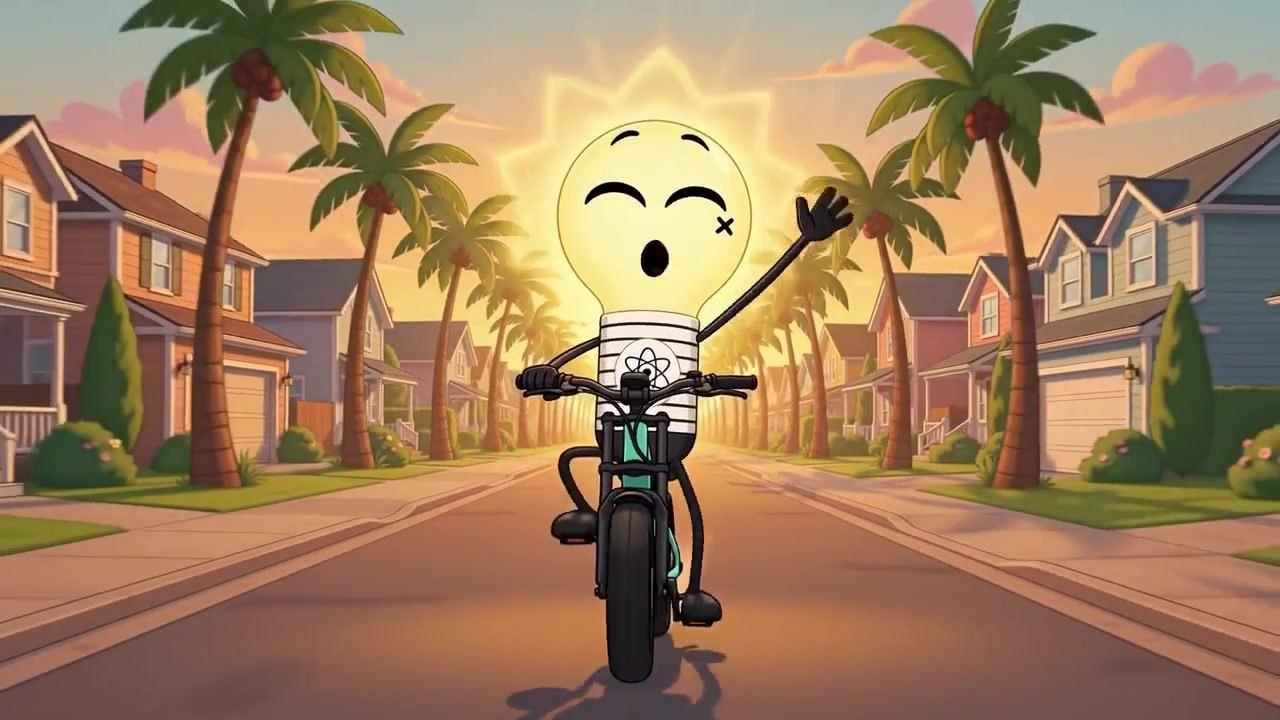
Spark The hustler-dreamer. Big energy, big pitches, big feelings — and a secretly soft heart. He rides a green e-bike and lights up when an idea might be good for the world and the wallet. Voice: a warm, energetic American “bro,” punchy when selling and quiet when it matters.
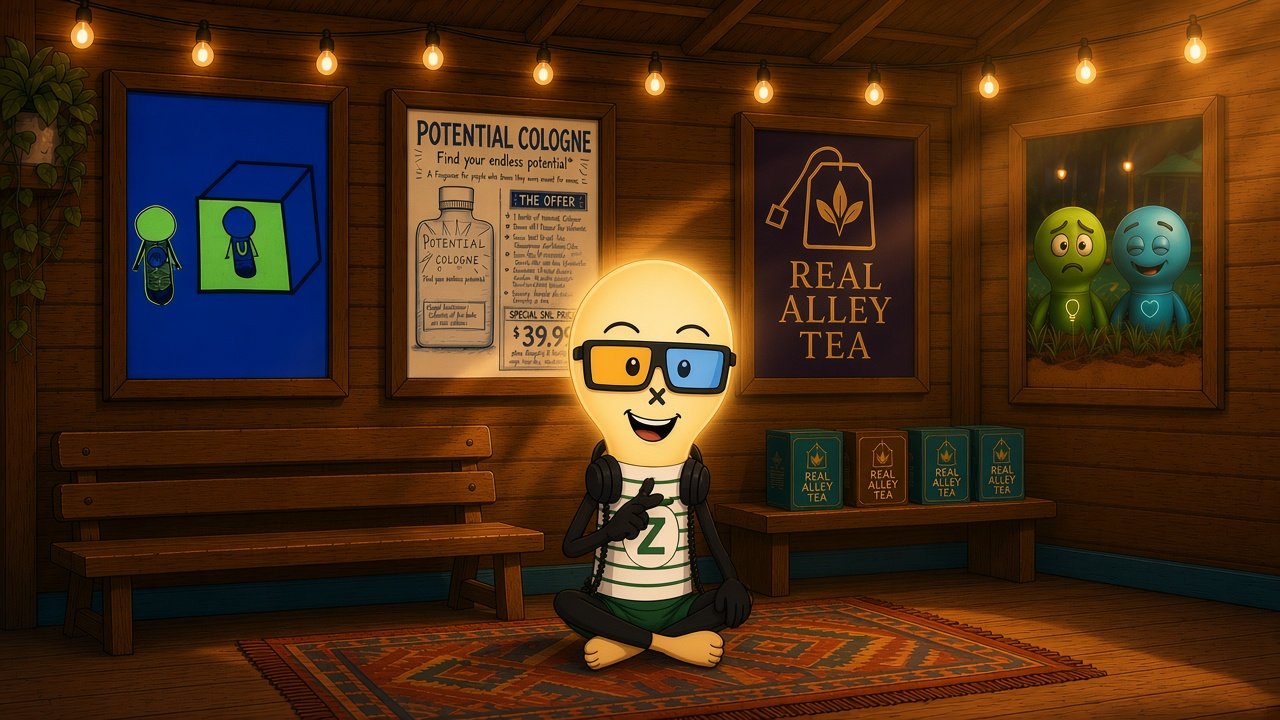
Agent Z, a relaxed lightbulb in orange-and-blue glasses, sits cross-legged on a rug inside the café.
Agent Z The laid-back barista, philosopher, and AI tinkerer who runs The Hut. Chill, a little mystical, and the first customer to sit with the Gratitude Rug. Rectangular orange-and-blue glasses, a Z badge, headphones around his neck, and a coffee cup close at hand.
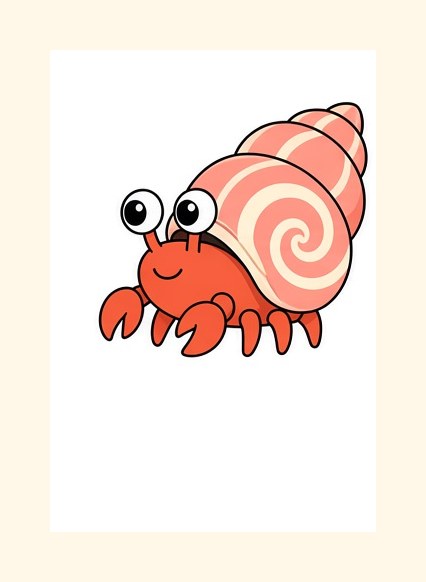
Shelly, a small red-orange hermit crab with a pink swirl shell and googly eyes.
Shelly the Hermit Crab The friendship mascot. Silent, shy, and adorable, with a pink swirl shell and little claws. She scuttles across the Gratitude Rug at the perfect moment. “Respect the shell.”

What the stories care about

Gratitude you can feel Sit down. Name three things you’re grateful for. Feel them. You don’t need to buy a thing.
Hype versus honesty Spark hustles and overhypes; Sage grounds him with calm humour. The truth always wins the final take.
Rest, don’t nest Rest is sacred. Nesting is the problem. A one-degree tilt is sometimes all it takes to get up again.
Showing up honestly In Midtown, a camping trip, a confession stump, and a cauldron of red berries do what bowling never could: help fathers show up for their kids.

A note about the creator

Jason A. Plouff has been drawing these lightbulb characters in his notebooks since the early 2000s. He is building Success Sitcoms the way he has described it: an animated television show with a foundation in comic books, where each comic is an episode, written and shepherded from his original characters.

You’re invited

How you can be part of it

This page is for three kinds of people: partners who may want to help fund the work, artists and animators who may want to help make it, and the friends and family already cheering it on.

For investors and partners

Jason is looking for partners who can help fund a simple, affordable animated pilot in his original artwork. He is open to conversations. This page does not make an offer, a forecast, or a promise of any return.

See investment possibilities

For artists and animators

Jason wants to bring Success Sitcoms to life in his original character art. Simple styles are welcome. If you are a creative director, animator, or artist who might want to help, he would be glad to talk.

Get in touch

For friends and family

Watch the pilot, share the work if it makes you smile, and cheer Sage and Spark on. Your encouragement means a lot as this series finds its way from notebook drawings to a finished show.

Watch the pilot

From the notebooks

Original character art

A look at Jason’s hand-drawn lightbulb characters — the drawings the series is built from. These are his originals, photographed from notebooks and sketch pages.

The series

Episodes

Each episode of the show has a companion comic. The first four are at different stages of the same path: script, comic, storyboard, animation, and release.

Episode 101 Pilot complete

The Lightbulb Gratitude Rug

  1. Script
  2. Comic
  3. Storyboard
  4. Animation
  5. Released

Two lightbulb best friends. One beach. Zero good ideas… yet.

Sage is calm, grounded and never without her orange mug. Spark is all whiteboard markers, big glasses and bigger schemes. Their mission: invent something that’s good for the world AND good for the wallet. The brainstorm gets loud, silly and surprisingly wise. It covers socks with pockets, thank-you gloves, an Echo Mirror you have to lift your chin to see, Failure Insurance that pays you to fall down, and a Comfort Zone Couch that tilts one degree at a time. Then Sage unrolls her Lightbulb Gratitude Rug, and the two friends film the most honest infomercial ever made: you don’t need to buy a thing to feel grateful.

The lesson Sit on the rug. Name three things you’re grateful for, and feel them. You don’t need to buy a thing.

How the story moves

  1. Teaser. The theme rolls in: “Good for the world, good for the wallet.”
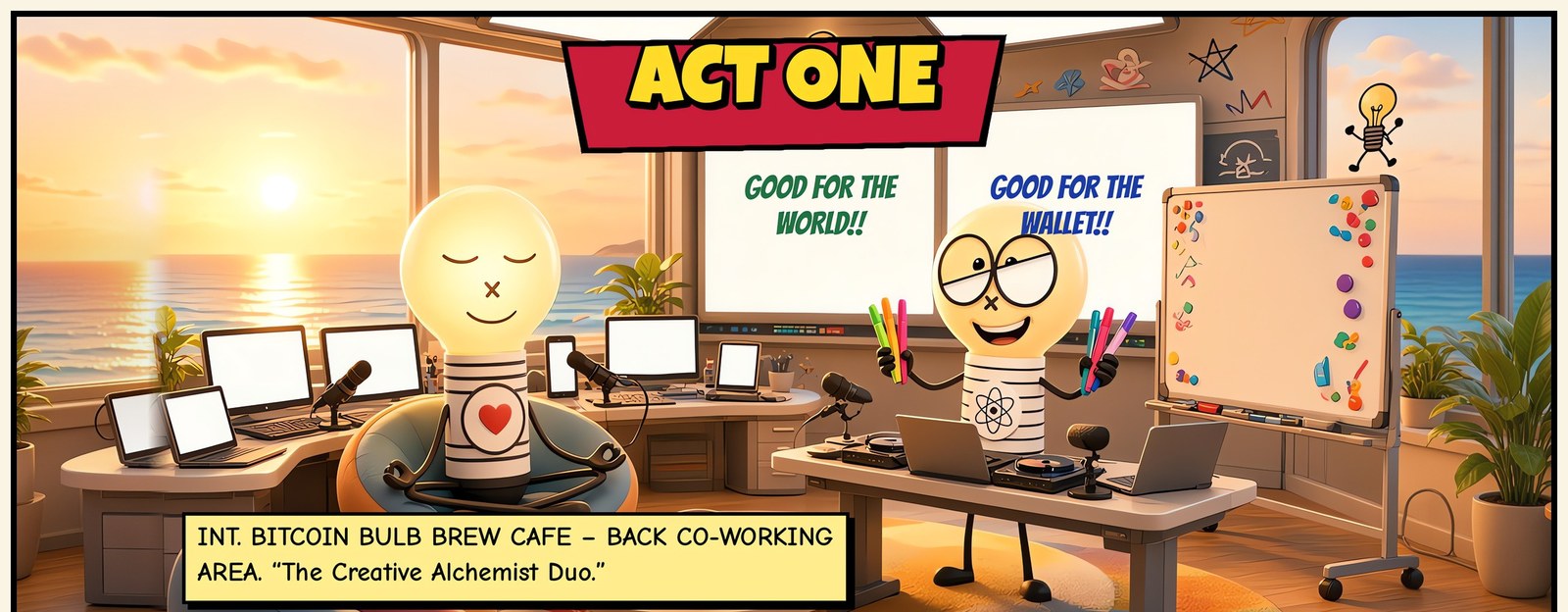
  2. Act One. Inside the Bitcoin Bulb Brew Café, Sage and Spark set out to invent something that helps people — and, if Spark has his way, pays the bills too.
  3. Act Two. A beach walk turns into a brainstorm: socks with pockets, thank-you gloves, the Echo Mirror, Failure Insurance, and the Comfort Zone Couch.
  4. Act Three. Sandwiches and sentences. Spark’s generous heart shows (including sats for sandwiches), and Sage writes the good lines down.
  5. Act Four. Sage unrolls the Gratitude Rug. Shelly the hermit crab arrives. Spark lights up: sit on it, say three things you’re grateful for, and feel amazing.
  6. Act Five. They film the honest infomercial. Agent Z buys the rug. The episode closes with a song and the lights of The Hut at sunset.

The animated pilot is on YouTube. A companion comic book of this episode is on the way.

Official cover of The Lightbulb Gratitude Rug: Sage, Spark, and a friend sit on a rug on a television at the beach, beside the Bitcoin Bulb Brew Cafe.
Sage and Spark sit side by side on the gratitude rug on the beach.
Sage and Spark sitting on the gratitude rug.
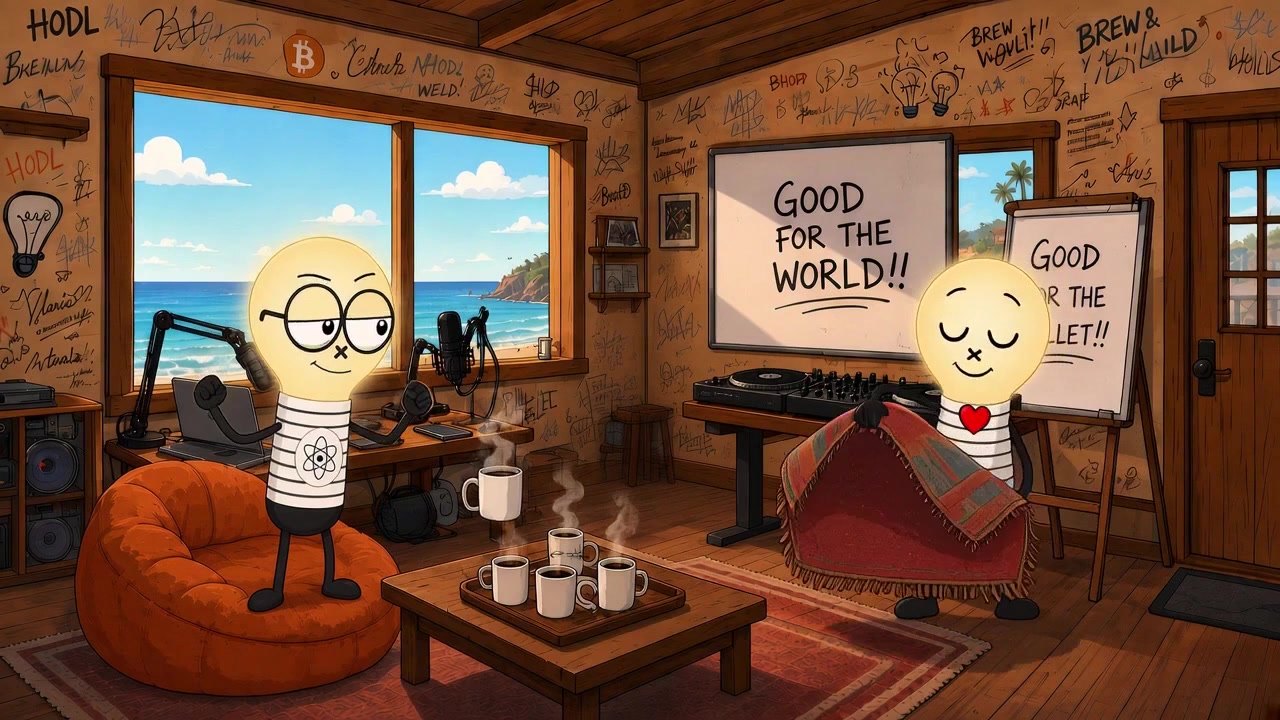
Spark and Sage in the cafe. Behind them, boards read Good for the world and Good for the wallet, and Sage holds the gratitude rug.
Spark and Sage at the cafe, with their “Good for the world, good for the wallet” boards.
A complete comic panel of Act One: Sage and Spark in the cafe, in front of boards that read Good for the world and Good for the wallet.
The opening of Act One, from the companion comic.
Spark rides his bike down a palm-lined street at sunrise, glowing, one arm in the air.
Spark on his bike, lit up with a new idea.
Sage rides a scooter along the coast at sunrise, holding her orange mug.
Sage on the coast at sunrise, orange mug in hand.
Episode 102 In production

The Comfort Zone Couch

  1. Script
  2. Comic
  3. Storyboard
  4. Animation
  5. Released

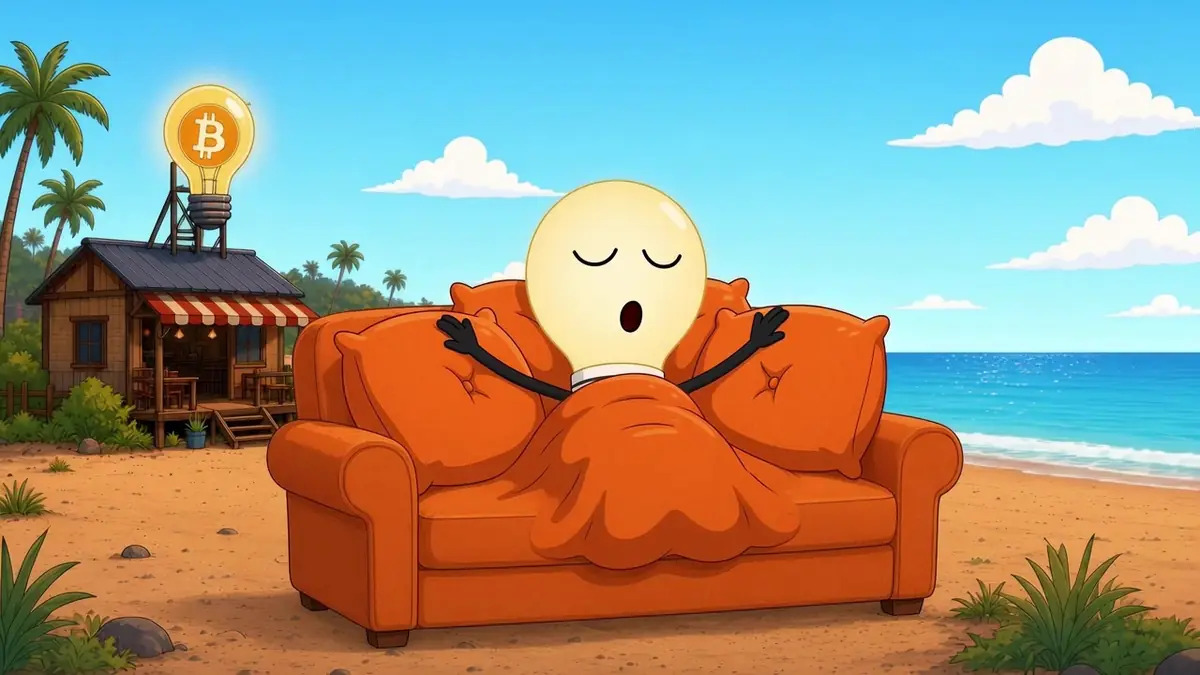
This episode grows out of a pitch from the pilot. In Vol 101, Sage said, “Tag, you’re it. How about THE COMFORT ZONE COUCH? A couch for real rest that won’t let you nest.” At random intervals it tilts one degree — a gentle nudge to get up and do the thing outside your comfort zone. Spark worried about shipping, suggested a Comfort Zone Chair, then went quiet: the idea had triggered a memory. Now they’re back at the café to make it real. Rest. Don’t nest. Sit back. Not forever. Comfy today, courageous tomorrow. One degree at a time.

The question at the heart of it The question Spark asked in Vol 101 is now the heart of the episode: “Who is to judge how long one can sit on the comfort zone couch?” Rest is sacred. Nesting is the problem. The couch decides — they program it with love. Not a catapult. Just one little degree.

How the story moves

This episode is built as eight short circles — from a bright-idea brainstorm at the café, to the story behind Spark’s own comfort zone couch, to an almost-sale that tells the truth.

  1. Circle 1 — You. A comfort zone. Back at the Brew, Sage brings the Comfort Zone Couch back to the table — the same idea she tagged Spark with in Vol 101. A couch for real rest that won’t let you nest. “Rest. Don’t nest. Sit back. Not forever.”
  2. Circle 2 — Need. Spark still wants an idea that’s good for the wallet. He goes back to the practical objections he raised in 101: shipping costs will kill the profits, how many couches would fit in a container, maybe a Comfort Zone Chair that’s easier to ship. Sage holds the line: good for the world, and for the wallet. The couch, also available as a chair.
  3. Circle 3 — Go. Sage can tell the idea still lands. In 101 it seemed to trigger a memory. Spark admits it: he had a comfort zone couch of his own, and it helped him. He was alone on it, with no one judging when he should get up. “Who is really to say?” Then he says the one-degree tilt might have helped him get unstuck faster. Sage: the couch decides — they program it with love. Spark is already on his feet: “We need an ad.”
  4. Circle 4 — Search. They try to film an honest ad for the couch. Spark starts a hard sell — a prototype, a floor model, buy one today. Sage tells the truth instead: rest is sacred, nesting is the problem, don’t sit on it too long. Take after take, the truth comes out.
  5. Circle 5 — Find. The ad is finished. It’s good. And, as Spark deadpans, unsellable: “Perfect. Nobody’s gonna buy it.” A couch that tells you to get up is a hard sell.
  6. Circle 6 — Take. They ask anyway. Agent Z, sitting still in the sand, watches the ad. “Then why are you telling me I don’t need it and asking me for my credit card at the same time?”
  7. Circle 7 — Return. Back at the Brew at night, Agent Z almost pays. His light flickers. “I can’t heal halfway.”
  8. Circle 8 — Change. Spark pulls out a lampshade “to hide the flicker,” and writes a new product on a napkin: Flicker Shade. Two best friends, back to pitching bright ideas for making money — right where we found them.

The script, storyboard, and animation drafts are underway, along with sample comic covers. This episode has not been released yet.

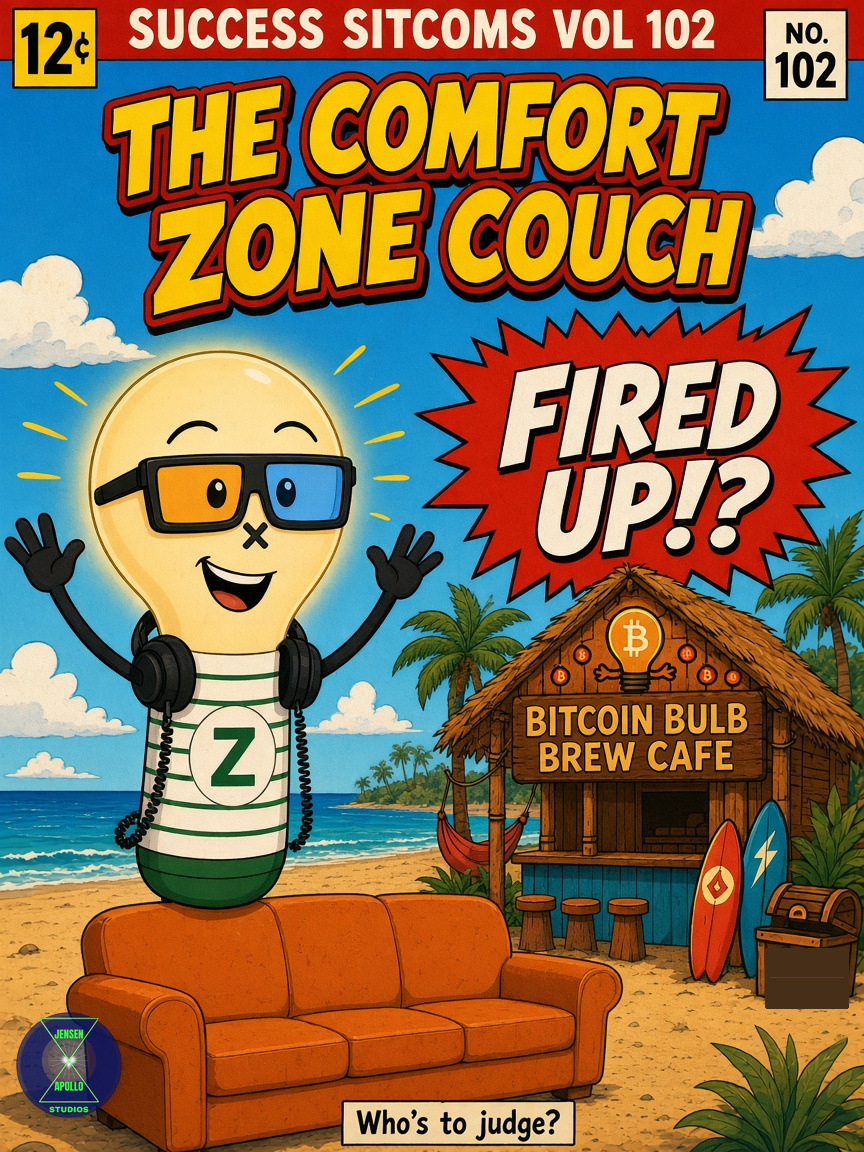
Official comic cover of The Comfort Zone Couch, Success Sitcoms Vol 102: a lightbulb character stands on the orange couch at the Bitcoin Bulb Brew Cafe.
Sage and Spark in a café booth, mug and marker on the table, pitching bright ideas for making money.
Brainstorming bright ideas at the café
Sage at the café table with her orange mug, arms wide, pitching the Comfort Zone Couch.
Sage pitches the Comfort Zone Couch
Spark at the café booth, marker in hand, mid-pitch.
Spark, mid-pitch
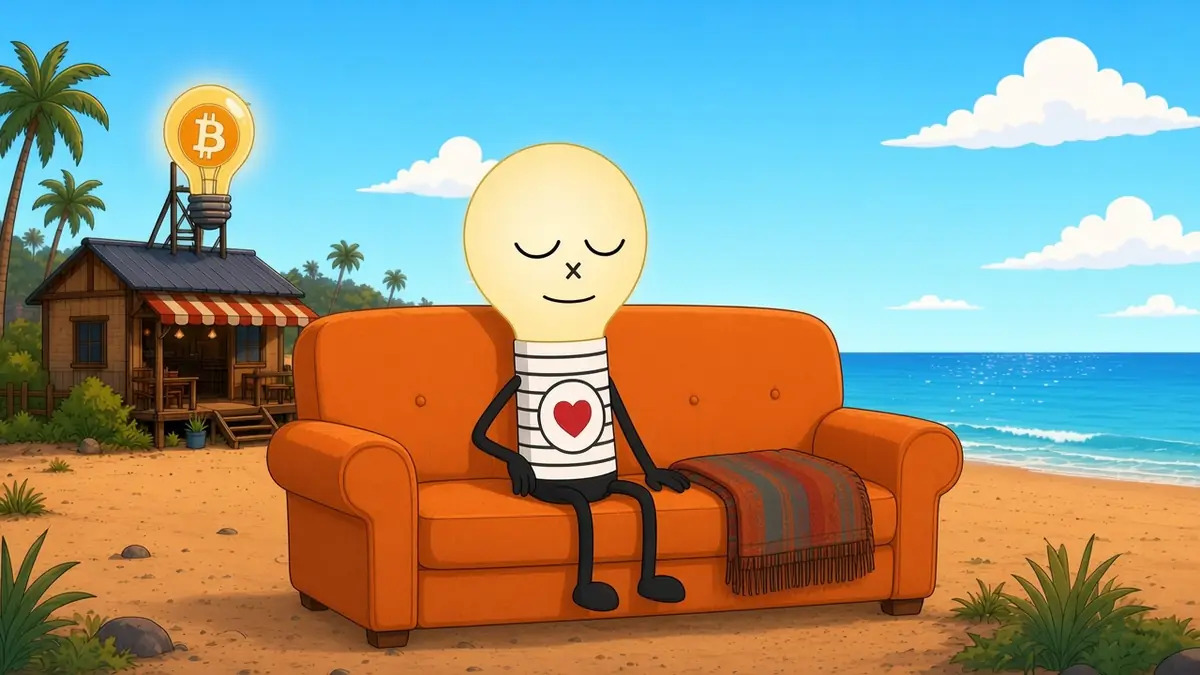
Sage sitting at rest on the orange Comfort Zone Couch on the beach.
Sage at rest on the Comfort Zone Couch
Sage sinking deep into the Comfort Zone Couch, nestled in the cushions.
Nesting is the problem
The Comfort Zone Couch tilts and Sage slides off, smiling, one degree at a time.
The couch tilts one degree
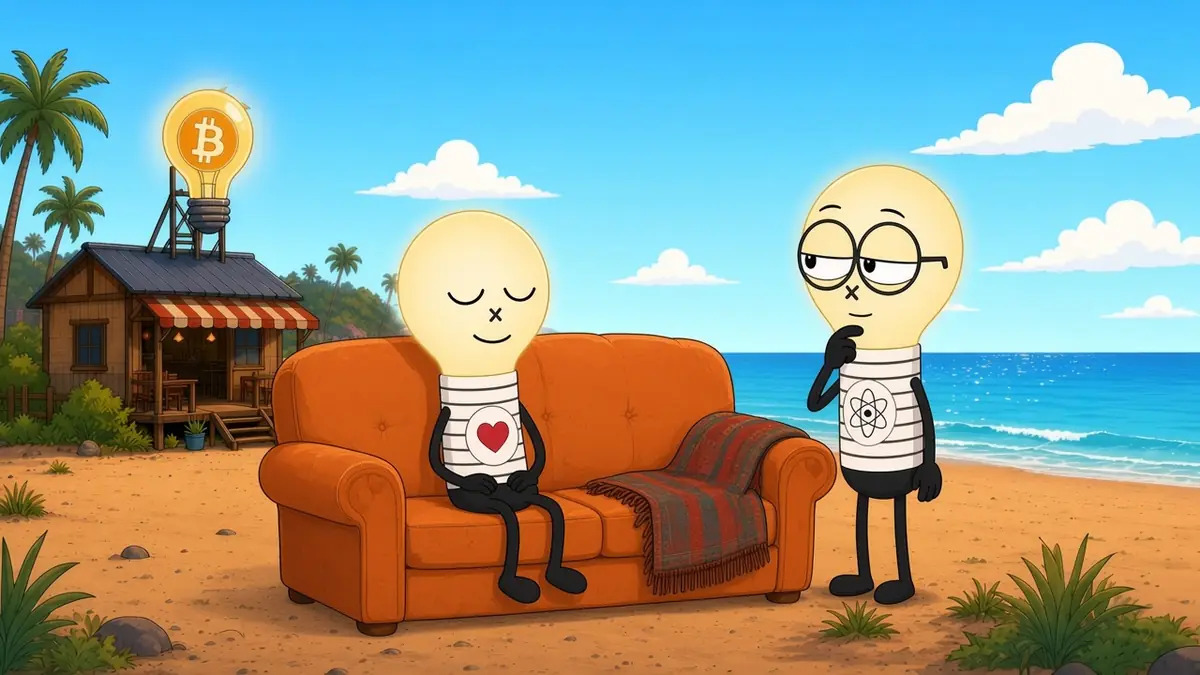
Sage sitting on the Comfort Zone Couch while Spark stands beside it on the beach.
Sage and Spark with the couch
Episode 103 Comic underway

Tribal Berries

  1. Script
  2. Comic
  3. Storyboard
  4. Animation
  5. Released

Four Midtown dads would rather bowl than watch their sons play Little League — “it’s only the regular season.” Their wives stage a mandatory father-and-son camping retreat, where a confession stump, talking trees, and a cauldron of red tribal berries do what bowling never could.

It is a story about showing up honestly for your kids.

The lesson Show up honestly. As one homecoming line has it: “Did you learn anything, or just hallucinate?” “Both.”

How the story moves

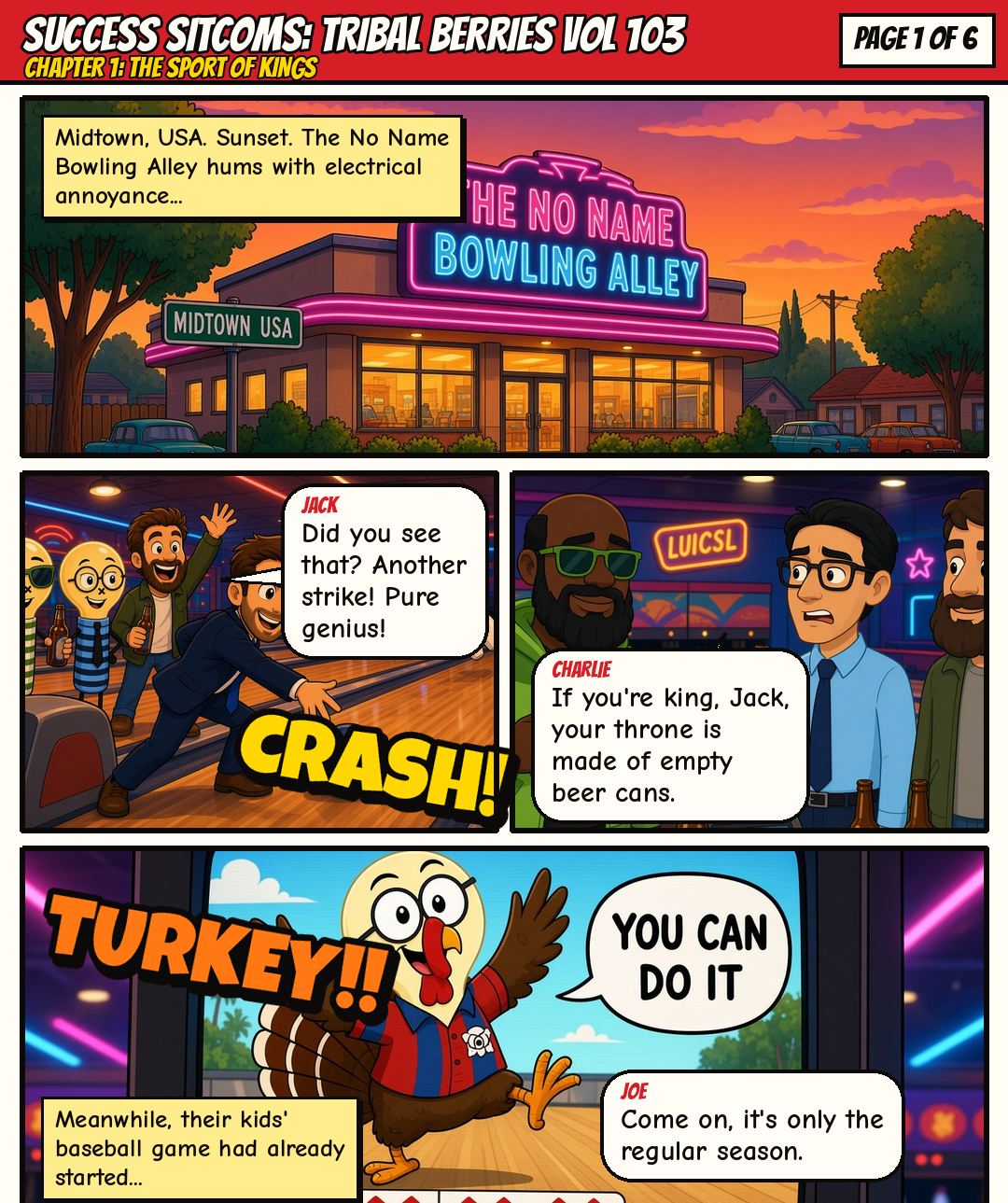
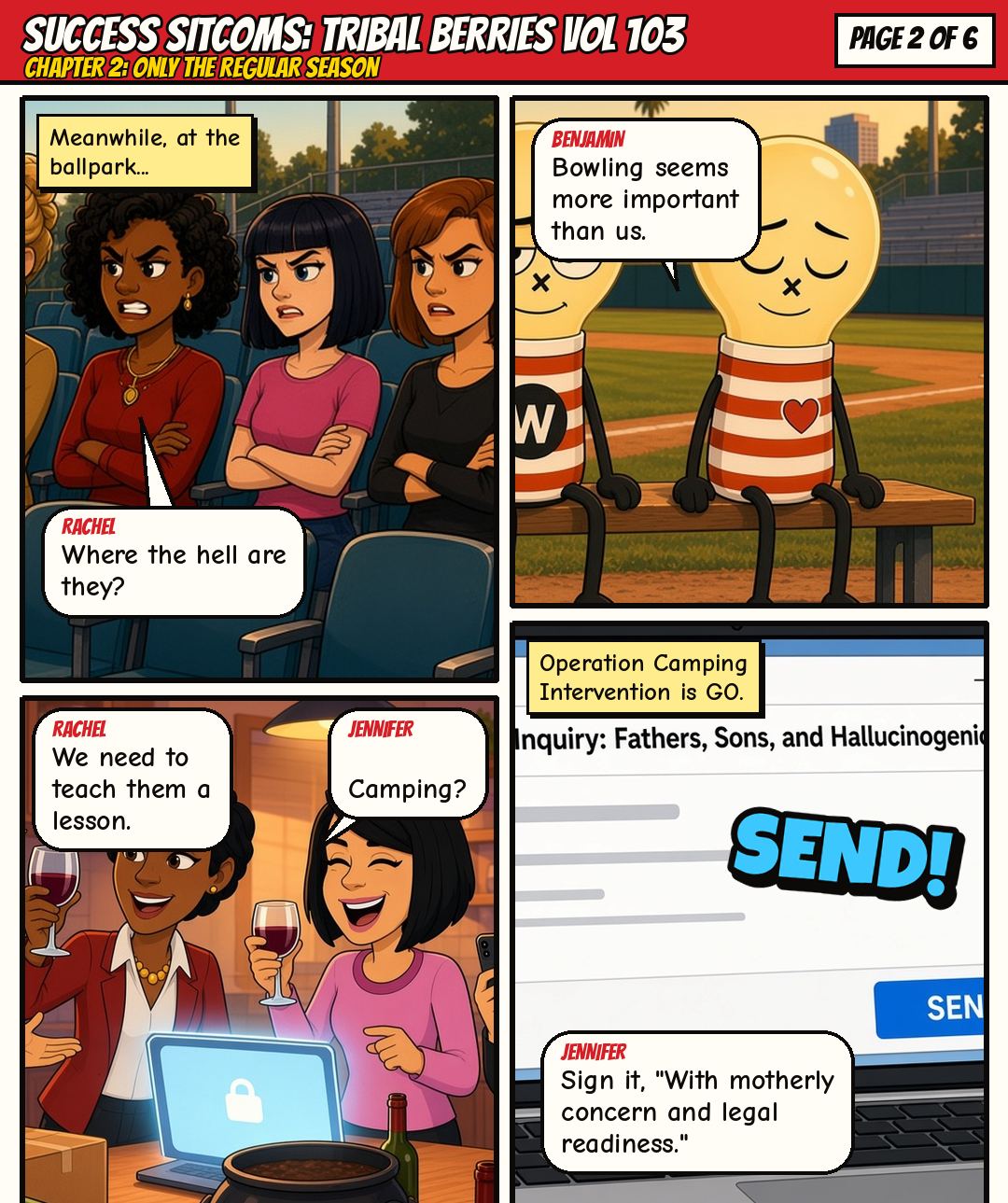
  1. Act One. At the No Name Bowling Alley, Jack, Charlie, Paula, and Joe celebrate strikes while their boys sit on a half-empty Little League bench. In the bleachers, the moms decide the dads need “the ultimate fatherhood wake-up call.”
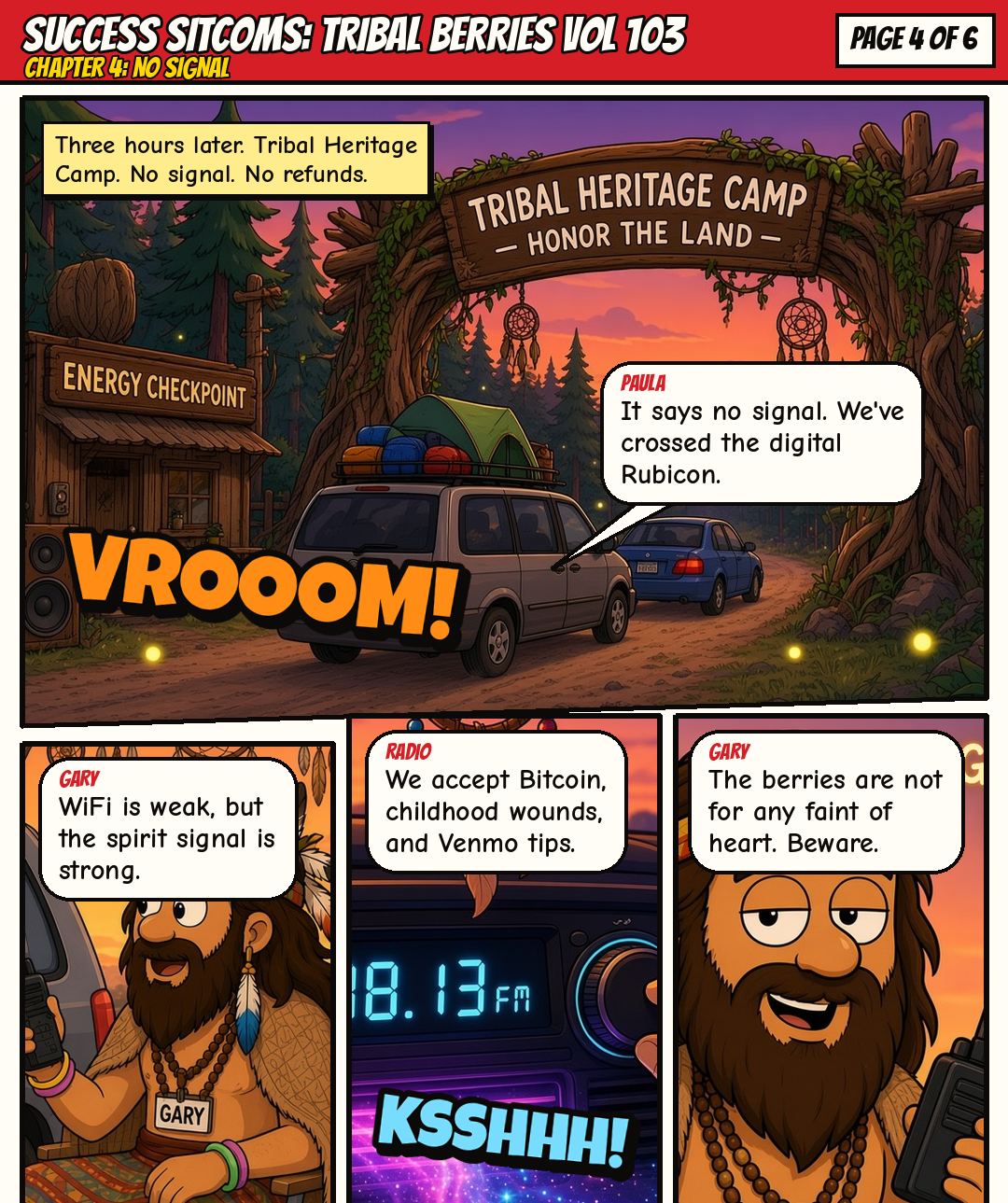
  2. Act Two. Operation Camping Intervention begins. At the gate, Gary, Gatekeeper of Frequencies, greets the “neglectful dads and slightly forgotten boys.” The Tribal Master warns them off the red berries. Someone immediately wants them.
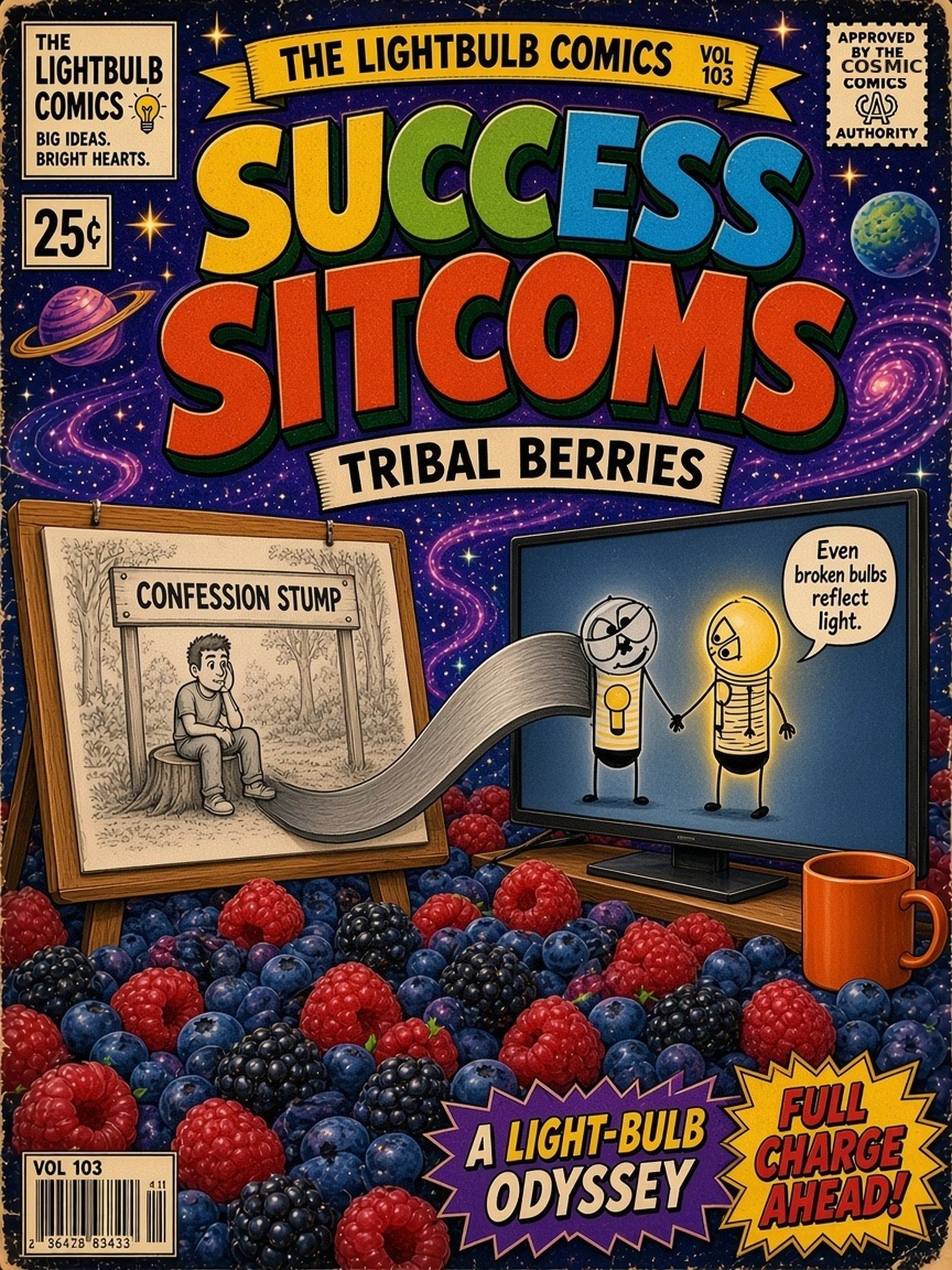
  3. Act Three. The Wilderness of Wounds: the Confession Stump, a tent that won’t pitch, and a golden cauldron of berries. By the fire, a son finally says it: “I don’t play baseball. I just wanted you to listen.”
  4. Act Four. The trees talk. The dads see what they’ve been missing. Homecoming — and next weekend, it’s the moms’ turn.
Success Sitcoms Vol 103 Tribal Berries comic cover: a pencil sketch at the confession stump turns into Sage and Spark on a TV, above a pile of berries.

Story overview

Twelve frames, in story order, from the episode’s key art. The companion comic is underway — here are the first pages, and the story as a filmstrip.

1. At the No Name Bowling Alley, Jack celebrates another strike.
2. The boys sit a half-empty Little League bench — “it’s only the regular season.”
3. The moms send the dads on a mandatory father-and-son camping retreat.
4. On the road to the Pacha Mama Palace Tribal Heritage Camp.
5. At the gate, Gary, Gatekeeper of Frequencies, greets them.
6. The Tribal Master: from hollow men to rooted fathers.
7. At home, the daughters build a fort from Dad’s bowling trophies.
8. Back at the house, Lucy is “provisionally sacred.”
9. The Confession Stump — “Let the stump hold your shame.”
10. The boys eat the tribal berries: “like if a jellybean got divorced.”
11. The trees talk back. Bowling balls don’t ask uncomfortable questions.
12. “To grow forward, you must sometimes return to the roots.”
Tribal Berries page 1, at the No Name Bowling Alley.
From the comic: The No Name Bowling Alley
A story page from Tribal Berries.
From the comic, underway
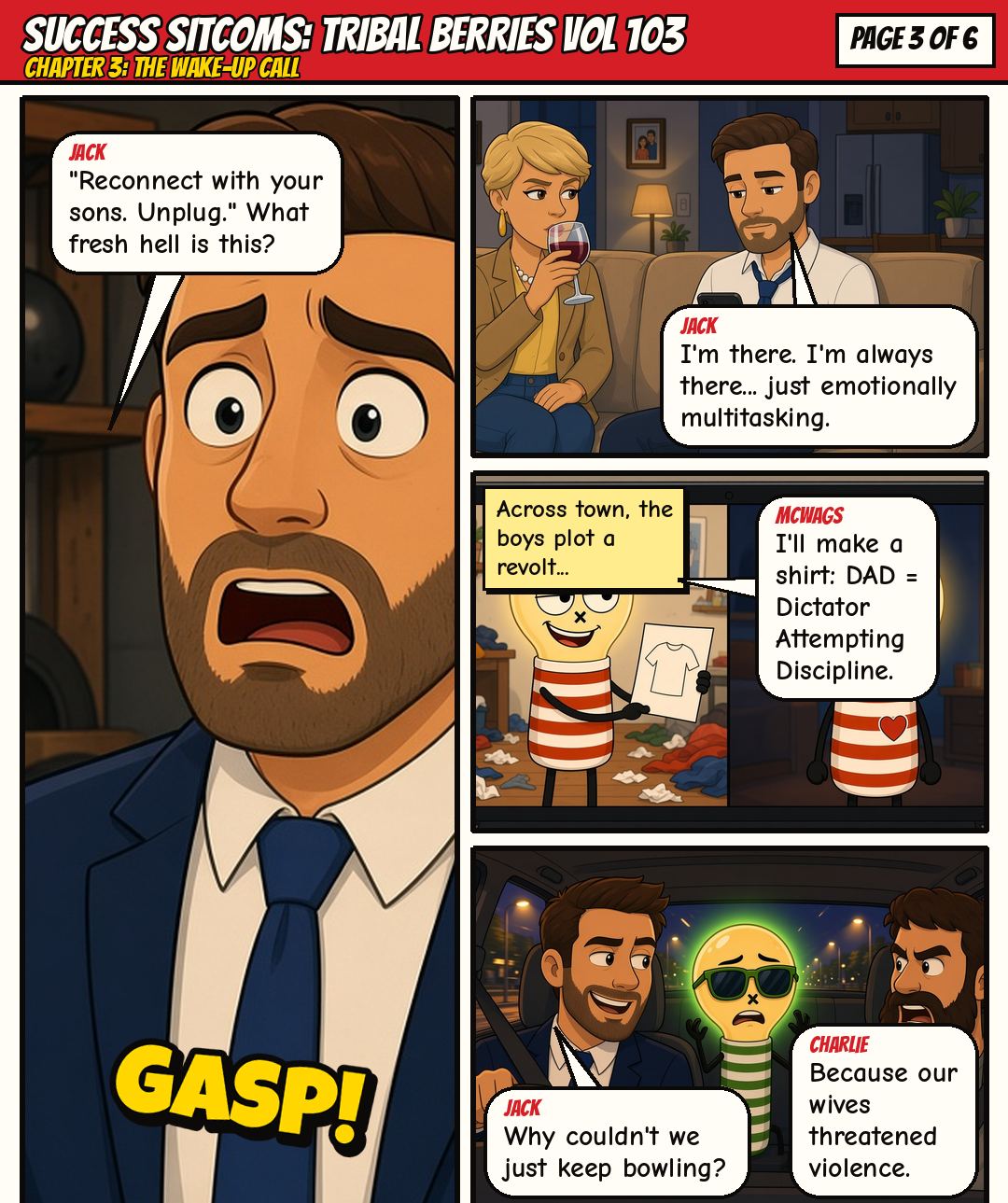
A story page from Tribal Berries.
From the comic, underway
A story page from Tribal Berries.
From the comic, underway
Episode 104 Script stage

The Special iPhone

  1. Script
  2. Comic
  3. Storyboard
  4. Animation
  5. Released
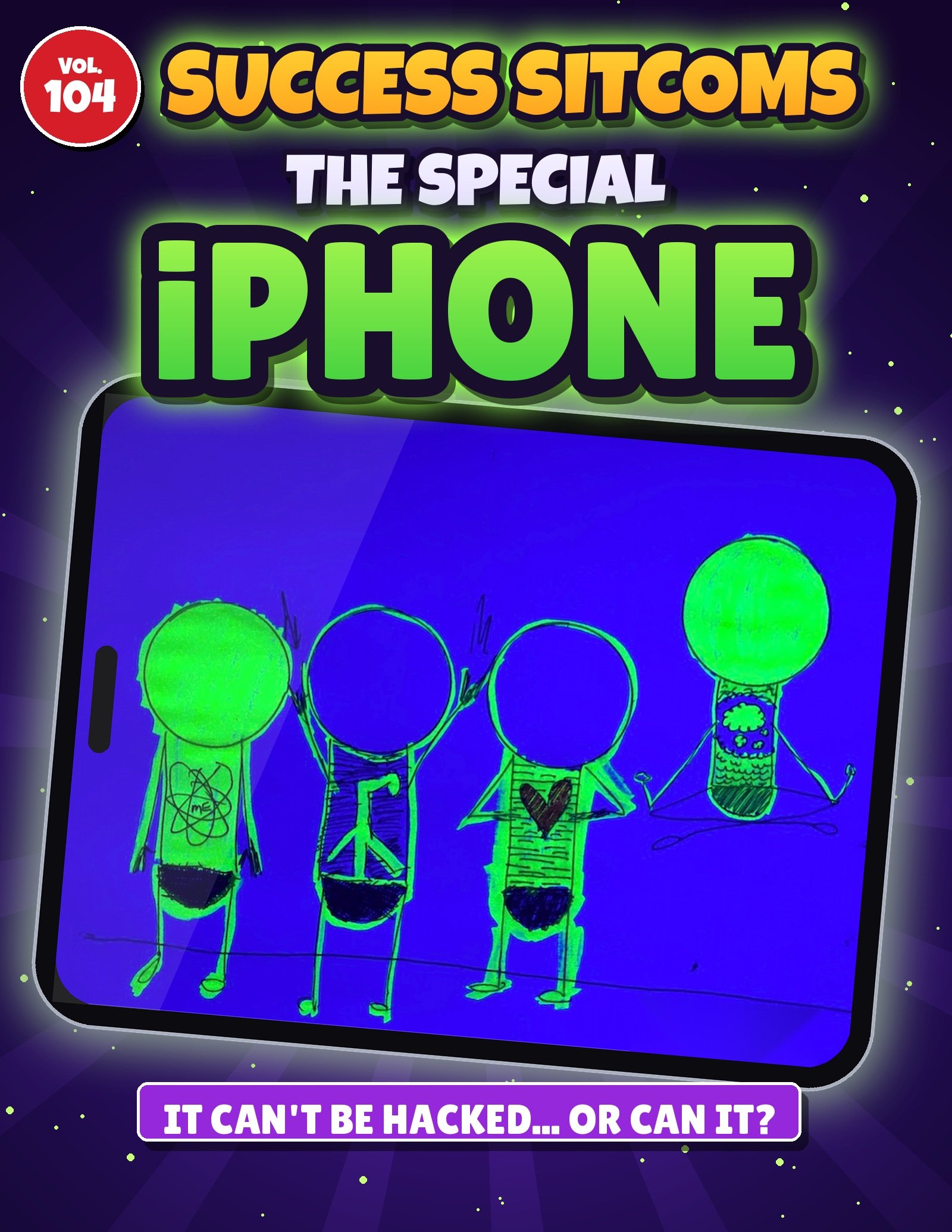
Cover of Success Sitcoms Vol. 104, The Special iPhone: four hand-drawn lightbulb characters glowing under blacklight on an iPhone screen.

In Midtown U.S.A., Agent Z answers the phone at a questionable “hacking iPhone solutions” outfit — and Spark gets pulled into a scheme around a special iPhone that was never supposed to be hacked.

The script exists, written by Jason A. Plouff and set in Midtown. Episode art is still on the way.

How the story moves

  1. The campaign trail. Mr. Jackson and Rachel speak to the people of Midtown from a podium covered in candidate colors and banners. Their campaign is short of funds. Uncle Charlie arrives to drive them — in a pickup he calls a luxury four-door.
  2. The bus stop. One 11, Spark, and Lime Light are waiting for the school bus when Agent Z walks up in a suit, notepad in one hand and a pen in the other. He has a plan, and a company name: Hacking iPhone Solutions.
  3. Through Midtown. The scheme moves through the elementary school, the library, the bank, and the police station, as Midtown’s day gets stranger — and wetter.
  4. Apple headquarters, then home. The story reaches an auditorium where a new iPhone is being introduced, then comes back to Midtown: a library bill, a bus stop, and the friends standing where Agent Z first found them.

In development. The script exists; episode art is still on the way.

What’s next

Bringing the series to life in the original art

Jason is looking to bring Success Sitcoms to life in his original artwork as a simple, affordable animated pilot. He is open to conversations with animators, collaborators, and partners.

If that sounds like you, the best way to reach him is LinkedIn or WhatsApp, in the contact section below.

Get in touch

The bigger picture

Investment possibilities

These are possibilities, not offers. Jason is open to conversations about any of them. Nothing here is a forecast, a promise of return, or an invitation to buy a security.

The Lightbulbs, as characters, are meant to illuminate human consciousness on planet Earth. Sage, Spark, and their friends are little living lights — funny, flawed, and trying to stay lit — who take the ideas we use to grow and turn them into stories you can laugh at and feel. If a lightbulb can sit on a rug, name three things it’s grateful for, and mean it, maybe we can too.

The long-term path

Comics Animated series Feature films

The brand is heading toward feature films. The path is the one Jason has been walking: comic books as the foundation, each comic an episode of the show, then an animated series, and, down the road, these characters on the big screen. The pilot is already on its feet. The hope is to grow that into a series, and then to take the Lightbulbs all the way there.

Ways a partner might help

Funding an animated pilot

Help finish, polish, or produce a simple, affordable animated pilot — or a next episode — in Jason’s original artwork, so the series has a finished piece to show.

Example estimate: a new-artwork animated pilot could range from the low tens of thousands to around $200,000, depending on length, style and team. Final figures will follow real animation bids.

A co-production or licensing partnership

Share the work of making, distributing, or licensing the show and its characters — a co-production, a distribution conversation, or a licensing partnership around the Lightbulbs and their world.

Terms would be shaped together in conversation.

Merch or comics

Help publish the companion comics, or bring characters like Sage, Spark, and Shelly onto the page and into the world as merch — the bibles already imagine a friendship-mascot patch for Shelly, and each episode is meant to have its comic.

Example estimate: a first comic or merch run is usually a smaller line item than a pilot, often in the low thousands to low tens of thousands of dollars, depending on print run and fulfillment.

A series pickup

The longer conversation: taking a finished pilot and a run of comics and finding a home for Success Sitcoms as an animated series — the middle step on the path toward feature films.

Terms for a series pickup would be a later conversation, shaped together if that path opens up.

If any of this sounds like a conversation worth having, the best way to reach Jason is LinkedIn or WhatsApp, below.

Get in touch

This section is not an offer of securities. The ideas above are possibilities, and the financial terms are illustrative estimates only — not a formal ask, not a promise, and not investment advice.